No one warns you about the quiet.
You spend years inside something larger than yourself — a unit, a mission, a rhythm that tells you where to be and who is counting on you. Then it ends. The gear gets turned in. The formation scatters to a hundred zip codes. And one ordinary morning you are standing in a kitchen that is far too quiet, in a life that, for the first time in a long time, does not seem to require you.
That is the part that is hard to say out loud. It isn't only the things that happened in uniform. For a great many veterans, the deepest wound of coming home is subtraction — the sudden absence of belonging. The people who once had your back are gone. The shared purpose is gone. The structure that held the days together is gone. Civilian life, for all its comforts, asks for almost none of the things you were built to give, and a person who was always part of something can find themselves, without ever choosing it, part of nothing.
We say this directly (and with confidence) because we have lived it. Hero Haven is built and staffed by people who are either veterans or veteran-connected — who know the burden of that silence from the inside. We are not studying this from a comfortable distance. We are describing a territory we have walked.
And we will say the next part plainly too: that silence is not harmless. Isolation is not a mood that passes. It is the ground in which the worst outcomes take root. When a person loses their community, their purpose, and their structure all at once, the danger is not abstract — it is the slow erosion of someone who used to be the steadiest person in the room. The most protective thing anyone can offer is not a brochure or a program. It is reconnection — a way back into belonging. The question that built this institution was that simple: what actually brings people back?
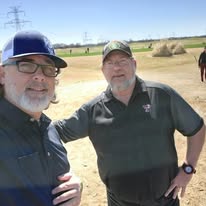
Why Movement, and Why This
Part of the answer is older than any clinic. Bodies that move tend to carry minds that heal. The link between physical activity and mental health is among the most settled things we know about being human — movement steadies the nervous system, lifts the fog, restores sleep, and gives a restless mind somewhere to put itself. Add open sky, sunlight, the green of living things, and the plain work of walking miles over uneven ground, and you have, in ordinary terms, medicine that does not come in a bottle.
But a treadmill in a silent garage does not repair what the silence broke. Exercise on its own is not the cure, because the wound was never only physical. What restores a veteran is movement braided together with the three things service used to provide at no cost: belonging, structure, and people who understand without being told. The rare activity that weaves all of these into a single afternoon is the one we have chosen to build around — not as recreation, and not as a perk, but as a therapeutic modality: a deliberate, repeatable pathway back into the things that keep a person whole.
What the Course Gives Back
Walk a course with another veteran and you will recognize its architecture almost immediately, because you lived it for years.
There is a standard. The scorecard does not care about your rank or your résumé; the rules are the rules, the ball lies where it lies, and you answer for every stroke. After years of being held to a standard and then coming home to a world that seems to expect nothing of you, the quiet dignity of being measured again — fairly, honestly — is its own kind of relief.
There is the ribbing. The merciless, affectionate needling that anyone who has worn the uniform knows in their bones. A shanked drive will be commemorated for the rest of the round and possibly the rest of your natural life. It looks, to an outsider, like teasing. It is something much closer to love. The needling is how we say, without ever having to say it, I see you, I'm glad you're here, you belong with us. Civilians sometimes mistake it for cruelty. Veterans know it for exactly what it is — the native language of people who have your back.
There is the relief of not having to translate. Beside another veteran, you do not have to explain why a sudden noise made you flinch, or why some days sit heavier than others. You do not have to perform being fine. The shorthand is already there, and it costs you nothing.
And there is the shape of the thing itself. A round of golf is a mission in miniature: an objective, a sequence, conditions to read, a plan that meets the terrain and then has to adapt. You assess, you commit, you execute, you adjust, and you carry the result forward to the next hole. For a mind trained to operate in precisely that way, the course is familiar ground — purpose with a beginning, a middle, and an end, lived out over four unhurried hours.
Those four hours may matter most of all. Hard things rarely get said across a table, under a clock, with someone studying your face. They get said shoulder to shoulder, walking, in the long easy spaces between shots, when no one is required to look at anyone. There is a reason so much of the real conversation between people who served happens side by side rather than face to face. Golf is built almost entirely out of that geometry — a walk beside someone, room to breathe, and time enough for the thing underneath to finally surface on its own.
Beside another veteran, you don't have to translate — and that, too, is medicine.
A Bridge Back to the World
The military gave belonging by design. Civilian life does not. That is the gap so many veterans fall into — not for lack of effort, but because the civilian world rarely runs on the currency they know best. Golf is one of the few places that still does. It trades in shared standards, earned ribbing, common objectives, and side-by-side time — the same coin that bought brotherhood in uniform.
That makes a course a rare meeting ground. A veteran can extend the camaraderie outward on it — to other veterans, certainly, but also to neighbors, coworkers, and friends who never served and never will. The game becomes a kind of translator. It lets someone who has felt like a stranger in his own town stand on level ground with anyone, speaking a language everyone at the tee already shares. Camaraderie does not have to end at separation. It can be carried across — onto the grass, into the civilian world, and forward into the rest of a life.
The Formation Includes the Family
And community was never only the unit. The most overlooked support system in a veteran's life — the one that carries the most weight and receives the least help — is the family. The spouse who ran the household through every deployment and learned not to ask for too much. The son or daughter who grew up giving a parent room they did not fully understand. They served too, in their own way, and they carry their own quiet. Any restoration that tilts toward the veteran and forgets the family is only half a restoration, and that is the half the rest of the world keeps neglecting. That is the gap this institution exists to close.
Here again, golf does what few things can. It gives a veteran and a child a shared objective that asks for no speeches — just a walk, a few swings, a long afternoon side by side — the same geometry that opens conversation between old soldiers quietly opening it between a parent and a kid who has been waiting years for the chance. It gives a couple something to do together that isn't heavy, until, gently, it becomes able to hold the things that are. The family steps back into the formation. The support system that was quietly carrying everything finally gets carried for a while.
Why It Is a Pillar, Not an Amenity
This is why golf at Hero Haven is a standing program pillar and a genuine therapeutic modality — not a luxury bolted onto a mission, but one of its load-bearing walls. In a single afternoon a veteran will actually want to repeat, it braids together nearly everything restoration requires: the body in motion, the nervous system settling, belonging restored, structure regained, the family drawn back in, and the slow side-by-side conversation that lets a person finally say the thing they have been shouldering alone. That people come back for it is not a happy accident. Engagement is the entire point — a modality only heals if someone returns to it, and veterans return to this one.
The formation is not gone. It scattered, but it was never destroyed. It can be rebuilt — on grass, in four-hour increments, beside people who understand without needing to be told. That is the work in front of us. We are building the place where it happens.